
Catholic Stations of the Cross PDFs offer a powerful devotional practice, recalling Jesus Christ’s final journey.
Resources like those from catholicresources.education provide free, downloadable booklets for personal or group prayer.
Historical Background of the Stations
The origins of the Stations of the Cross trace back to the early Christians who frequently visited Jerusalem, walking the Via Dolorosa – the “Sorrowful Way” – where Jesus carried His cross. Pilgrims unable to travel to the Holy Land sought to recreate the sacred path in their own locales.
Initially, this took the form of marking specific locations as representing events from the Passion. By the 14th and 15th centuries, the practice evolved into the fourteen stations we recognize today, largely influenced by Franciscan friars.
The formal standardization of the fourteen stations is attributed to Pope Clement XII in 1733. Today, readily available Catholic Stations of the Cross PDFs, like those found on catholicresources.education, allow individuals and communities to participate in this devotion, bringing the historical journey of Christ into their prayer lives, regardless of location. These PDFs facilitate accessibility and widespread practice.
Theological Significance of the Stations
The Stations of the Cross are profoundly theological, offering a meditative journey through the suffering, death, and resurrection of Jesus Christ. Each station isn’t merely a historical recollection, but an invitation to contemplate the depth of God’s love and sacrifice for humanity.
The devotion emphasizes themes of redemption, forgiveness, and the transformative power of suffering. Through identifying with Christ’s pain, believers are called to examine their own lives, repent of sin, and embrace the cross in their own challenges.

Catholic Stations of the Cross PDFs, easily accessible online, serve as tools for this spiritual encounter. Resources like those at catholicresources.education provide a structured framework for prayerful reflection. The stations remind us that suffering, united with Christ, can become a path to holiness and eternal life, reinforcing core tenets of the Catholic faith.
Different Traditions and Forms
The Stations of the Cross, while rooted in a common narrative, exhibit diverse traditions and forms. Historically evolving from pilgrimage to Jerusalem, the practice adapted to allow faithful participation where travel wasn’t possible.
Variations exist in the number of stations – while the traditional fourteen are most common, some traditions, like those of St. Alphonsus Liguori, include fifteen, adding a fifteenth station focusing on the Resurrection.
Catholic Stations of the Cross PDFs reflect this diversity. Some are presented as booklets for communal prayer, while others offer individual station meditations. Formats range from simple text-based versions to those incorporating artwork and scriptural reflections. Resources like those found on catholicresources.education demonstrate this variety, offering downloadable PDFs catering to different devotional preferences and parish needs.
Understanding the 14 Stations
Catholic Stations of the Cross PDFs detail Jesus’s Passion—from condemnation to entombment. Each station invites reflection on His suffering and sacrifice, fostering deeper faith.
First Station: Jesus is Condemned to Death
The First Station, as depicted in many Catholic Stations of the Cross PDFs, portrays Pontius Pilate’s unjust sentencing of Jesus. This moment marks the official beginning of Christ’s Passion, a culmination of false accusations and political maneuvering.
Reflecting on this station through a downloadable PDF encourages contemplation of the immense injustice suffered by Jesus. It prompts us to consider the weight of sin and the price of redemption. The imagery often focuses on Pilate washing his hands, symbolizing his attempt to distance himself from the responsibility, yet still condemning an innocent man.
Many PDFs include prayers and meditations specifically tailored to this station, inviting believers to acknowledge their own complicity in sin and to seek forgiveness. Resources like those available online offer visual representations alongside the text, enhancing the devotional experience. This station serves as a stark reminder of the human capacity for cruelty and the divine love that willingly embraced suffering.
Second Station: Jesus Takes Up His Cross
The Second Station, frequently found within Catholic Stations of the Cross PDFs, depicts Jesus willingly accepting the heavy burden of the cross. This act isn’t merely physical; it symbolizes His acceptance of the sins of humanity and His unwavering obedience to the Father’s will.
PDF resources often highlight the profound humility demonstrated by Jesus, a King choosing to embrace the suffering of a common criminal. Contemplating this station encourages reflection on our own burdens and how we respond to challenges; Do we resist, or do we accept them as opportunities for growth and union with Christ?
Prayers accompanying this station in downloadable booklets often ask for the strength to carry our own crosses with grace and courage. The visual depictions in these PDFs emphasize the weight of the cross and the determination in Jesus’s posture. It’s a powerful reminder that even in moments of immense suffering, hope and redemption are possible.
Third Station: Jesus Falls the First Time
The Third Station, commonly included in Catholic Stations of the Cross PDFs, portrays the first of Jesus’s falls under the weight of the cross. This isn’t simply a physical stumble, but a representation of His human frailty and the immense suffering He endured for our salvation.
PDF resources often emphasize the vulnerability of Jesus, highlighting His exhaustion and pain. This station invites us to contemplate the physical and spiritual toll of sin, and the cost of redemption. It’s a moment of profound empathy, urging us to connect with Christ’s suffering on a deeply personal level.
Prayers associated with this station in downloadable booklets frequently ask for forgiveness for our own failings and for the strength to rise after our own “falls” in life. The imagery within these PDFs powerfully conveys the weight of the cross and the impact of the fall, serving as a poignant reminder of Jesus’s sacrifice.
Fourth Station: Jesus Meets His Mother
The Fourth Station, a deeply moving encounter depicted in many Catholic Stations of the Cross PDFs, portrays Jesus meeting His Mother, Mary, along the Via Dolorosa. This moment is often presented as a silent, sorrowful exchange of grief and love. The PDFs frequently emphasize the shared suffering of mother and son, highlighting Mary’s profound empathy and unwavering faith.
Visual representations within these downloadable resources often show Mary’s heartbroken expression, mirroring the pain of all mothers who witness the suffering of their children. Prayers accompanying this station typically invoke Mary’s intercession, asking for her strength and comfort in times of personal hardship.
This station invites reflection on the maternal heart of Mary and her role in our salvation. Many PDF booklets include meditations on her sorrowful acceptance of God’s will, offering a powerful example of faith and resilience.
Fifth Station: Simon Helps Jesus Carry the Cross
The Fifth Station, commonly found within Catholic Stations of the Cross PDFs, recounts Simon of Cyrene assisting Jesus in carrying His cross. Exhausted and weakened from His suffering, Jesus receives this act of compassion, demonstrating the importance of shared burdens. These PDF resources often emphasize that Simon’s help wasn’t sought, but offered freely, highlighting selfless service.
Many downloadable booklets depict Simon struggling under the weight of the cross alongside Jesus, visually representing the shared physical and spiritual toll. Accompanying prayers often focus on recognizing our own capacity to assist others in their struggles, and seeking strength to bear our own crosses.
Reflecting on this station, the PDFs encourage contemplation on how we can embody Simon’s example in our daily lives, offering practical help and support to those in need. It’s a reminder that even small acts of kindness can make a significant difference.
Sixth Station: Veronica Wipes the Face of Jesus
The Sixth Station, frequently detailed in Catholic Stations of the Cross PDFs, narrates the compassionate act of Veronica, who dared to wipe the face of Jesus as He journeyed to Calvary. This moment embodies profound empathy and selfless love amidst immense suffering. PDF resources often highlight Veronica’s courage in approaching Jesus despite the hostile crowd.

Many downloadable booklets include imagery of Veronica offering her veil, and subsequently receiving an image of Jesus’ face imprinted upon it – a miraculous testament to her devotion. Prayers accompanying this station typically focus on recognizing Christ’s presence in those who suffer and extending comfort to others.
These PDFs encourage reflection on how we can see the face of Christ in every person we encounter, particularly those marginalized or in pain. It’s a call to respond with compassion and offer tangible acts of kindness, mirroring Veronica’s selfless gesture.
Seventh Station: Jesus Falls the Second Time
Catholic Stations of the Cross PDFs vividly portray the Seventh Station: Jesus Falls the Second Time. This station emphasizes the physical and spiritual exhaustion endured by Christ during His Passion. Downloadable resources often depict the immense weight of the cross and the brutal conditions of the Via Dolorosa, contributing to His repeated falls.
PDF booklets frequently include prayers acknowledging Jesus’ suffering and asking for strength to bear our own burdens. The imagery accompanying this station serves as a powerful reminder of His sacrifice and the depth of His love for humanity.
Reflection prompts within these PDFs encourage contemplation on our own moments of weakness and reliance on God’s grace. It’s a call to find solace in Christ’s example, recognizing that even in falling, He demonstrates unwavering obedience and love. The station highlights humility and perseverance.
Eighth Station: Jesus Meets the Women of Jerusalem
Catholic Stations of the Cross PDFs depict the poignant Eighth Station: Jesus Meets the Women of Jerusalem. These resources often illustrate Jesus turning to the lamenting women, offering a message not of sorrow for His suffering, but of greater grief for their own future and the coming tribulations.
PDF booklets frequently include prayers reflecting on the sorrowful prophecy and the importance of repentance. The visual representations in these downloadable guides emphasize the compassion of Jesus even amidst His own agony.
Reflection prompts within the PDFs encourage consideration of the role of women in salvation history and the universality of Christ’s suffering. This station serves as a warning and a call to prepare for spiritual battles. It’s a moment of profound empathy and a reminder of the consequences of sin, prompting a deeper commitment to faith.
Ninth Station: Jesus Falls the Third Time
Catholic Stations of the Cross PDFs powerfully portray the Ninth Station: Jesus Falls the Third Time. These downloadable resources emphasize the sheer physical exhaustion and spiritual weight Jesus endured on His journey to Calvary. The images often depict a complete collapse, highlighting His utter vulnerability and sacrifice.
PDF booklets accompanying this station typically include prayers focusing on perseverance in the face of adversity and seeking strength from God during times of weakness. They encourage reflection on personal failings and the need for God’s grace to rise after each fall.
Many PDFs offer meditations on the symbolism of this fall – a representation of humanity’s repeated sinfulness and Jesus’s unwavering commitment to redemption. This station serves as a humbling reminder of our dependence on divine mercy and the importance of continual repentance.
Tenth Station: Jesus is Stripped of His Garments
Catholic Stations of the Cross PDFs vividly illustrate the Tenth Station: Jesus is Stripped of His Garments, a moment of profound humiliation. These downloadable resources often depict the brutal reality of this act, emphasizing the complete stripping away of Jesus’ dignity as a human being.
PDF booklets accompanying this station typically include prayers reflecting on the loss of innocence and the suffering endured through public shame. Meditations encourage contemplation on the vulnerability of Jesus and the depth of His sacrifice for humanity’s sins.
Many PDFs highlight the symbolism of being stripped – representing Jesus being stripped of all earthly possessions and power, offering Himself completely to God’s will. This station prompts reflection on detachment from worldly desires and embracing humility, mirroring Christ’s example.
Eleventh Station: Jesus is Nailed to the Cross
Catholic Stations of the Cross PDFs powerfully portray the Eleventh Station: Jesus is Nailed to the Cross, a depiction of excruciating physical and spiritual pain. These downloadable resources often feature imagery emphasizing the brutality of the Roman crucifixion, focusing on the piercing of hands and feet.
PDF booklets accompanying this station typically include prayers acknowledging Jesus’ immense suffering and offering petitions for strength in facing personal trials. Meditations encourage contemplation on the sacrifice made for the forgiveness of sins and the promise of salvation.
Many PDFs highlight the symbolism of the nails – representing the binding of humanity to sin and Jesus’ liberation through His death. This station prompts reflection on the cost of redemption and the acceptance of suffering as a path to spiritual growth, mirroring Christ’s ultimate sacrifice.
Twelfth Station: Jesus Dies on the Cross
Catholic Stations of the Cross PDFs dramatically present the Twelfth Station: Jesus Dies on the Cross, the culmination of His suffering and a pivotal moment in Christian belief. These downloadable resources often feature somber artwork depicting Jesus’ final moments, emphasizing His complete surrender to God’s will.
PDF booklets accompanying this station typically include prayers of profound sorrow and gratitude for the ultimate sacrifice. Meditations encourage reflection on the meaning of Jesus’ death – a victory over sin and death, offering eternal life to believers. The “Father, into your hands I commend my spirit” quote is frequently included.
Many PDFs highlight the universality of Jesus’ sacrifice, extending forgiveness to all humanity. This station prompts contemplation on the depth of God’s love and the transformative power of faith, offering solace and hope amidst personal struggles.
Thirteenth Station: The Body of Jesus is Taken Down from the Cross
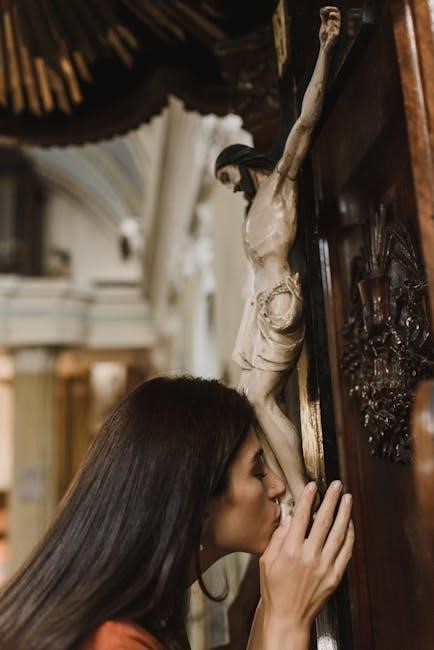
Catholic Stations of the Cross PDFs powerfully illustrate the Thirteenth Station: The Body of Jesus is Taken Down from the Cross, a moment of profound grief and tender reverence. These downloadable resources often depict Mary, cradling her son, and other faithful followers mourning His loss. The imagery emphasizes the physical reality of Jesus’ suffering and death.
PDF booklets accompanying this station typically include prayers lamenting Jesus’ death and honoring Mary’s sorrowful heart. Meditations encourage reflection on the emptiness felt by those who loved Jesus and the weight of His sacrifice.
Many PDFs highlight the solemnity of this act, preparing for the burial and anticipating the resurrection. This station prompts contemplation on the fragility of life and the enduring power of love, offering comfort and a sense of shared grief.
Fourteenth Station: Jesus is Laid in the Tomb
Catholic Stations of the Cross PDFs conclude with the Fourteenth Station: Jesus is Laid in the Tomb, a moment of quiet finality and hopeful anticipation. These downloadable resources often feature images of the sealed tomb, symbolizing both death and the promise of resurrection. The starkness of the scene invites deep contemplation.
PDF booklets accompanying this station typically include prayers acknowledging Jesus’ death and expressing faith in His eventual triumph over death. Meditations focus on the silence and darkness of the tomb, representing the period of waiting and the mystery of God’s plan.
Many PDFs emphasize that this is not an ending, but a transition. It’s a time to reflect on the sacrifice made and to prepare hearts for the joy of Easter. This station encourages trust in God’s providence and the certainty of eternal life.

Resources for Stations of the Cross PDFs
Catholic Stations of the Cross PDFs are readily available online, with sites like catholicresources;education offering free downloadable booklets and printable stations for devotional use.
Catholic Resources Education PDF Availability
Catholic Resources Education stands out as a valuable online source for downloadable Stations of the Cross PDFs. They currently offer a “Stations of the Cross (Crown)” complete set of 14 stations available for free. This resource is easily accessible through their website, catholicresources.education, specifically at this direct link.
The PDF is presented in a visually appealing format, showcased as a webp image with dimensions of 612×792 pixels. This suggests a design suitable for printing or viewing on digital devices. The availability of this free resource makes the practice of the Stations of the Cross more accessible to individuals and communities seeking a convenient and affordable devotional aid. The site provides a straightforward way to engage in this traditional Catholic practice.
Users can readily download and utilize this PDF for personal prayer, parish groups, or educational purposes, fostering a deeper connection with the Passion of Christ.
Finding Free Printable Stations of the Cross
Locating free, printable Stations of the Cross resources is readily achievable online. Catholic Resources Education is a prime starting point, offering a complete 14-station set as a free PDF download (link). Beyond this, a broader search reveals options on sites like Mungfali.com, which highlights the availability of “Stations of the Cross Booklet Catholic PDF” resources.
Yandex search results also point to the Catholic Resources Education offering, showcasing the image format (webp, 612×792 pixels) and ease of access. When searching, keywords like “Stations of the Cross PDF,” “free printable Stations,” and “Catholic devotionals” yield numerous results.

It’s important to preview the PDF before printing to ensure the format and artwork suit your needs. Many parishes and dioceses also offer downloadable PDFs on their websites, providing additional free options for personal or communal use.
Online Sources for Downloadable PDFs
Several online platforms host downloadable Stations of the Cross PDFs; Catholic Resources Education (link) stands out, providing a complete, free “Crown” set in PDF format. Search results indicate availability through sites like Mungfali.com, which aggregates links to various Catholic PDFs, including Stations of the Cross booklets.
Yandex’s image search reveals direct links to the Catholic Resources Education PDF, showcasing its visual presentation. Beyond dedicated Catholic websites, general document-sharing platforms may also contain user-uploaded PDFs, though verifying the source and content is crucial.
Exploring diocesan websites and online Catholic bookstores can uncover additional free or low-cost downloadable options. Remember to check file sizes and preview the PDF to ensure it meets your printing and devotional requirements before downloading and using the resource.
Variations in PDF Formats (Booklet, Individual Stations)
Catholic Stations of the Cross PDFs come in diverse formats to suit different devotional needs. A common format is the complete booklet, offering all fourteen stations within a single, printable document – exemplified by the “Crown” set from Catholic Resources Education. This is ideal for personal prayer or group use, providing a cohesive experience.
Alternatively, PDFs offering individual station images or pages are available. These are useful for creating custom displays, projecting stations during services, or for those preferring a more fragmented, reflective approach. Some PDFs include accompanying prayers and meditations for each station.
Variations also exist in layout and artistic style, ranging from simple text-based formats to richly illustrated versions. Consider your intended use – a booklet for following along, or individual stations for visual focus – when selecting the appropriate PDF format.

Using Stations of the Cross PDFs
Catholic Stations of the Cross PDFs facilitate personal reflection, group devotion, and parish use. Downloadable booklets from sites like catholicresources.education enhance prayerful experiences.
Personal Prayer and Reflection
Utilizing Catholic Stations of the Cross PDFs for personal prayer offers a deeply moving and intimate experience with the Passion of Christ. These readily available resources, such as those found on catholicresources.education, allow individuals to walk with Jesus on His sorrowful path to Calvary at their own pace and in the comfort of their own space.
The visual aids often included in these PDFs – images depicting each station – can powerfully stimulate contemplation and emotional connection. Taking time to meditate on each station, reading the accompanying prayers, and reflecting on the significance of Jesus’ suffering can foster a profound sense of empathy and spiritual growth.

PDF formats allow for convenient printing and portability, enabling prayer during commutes, quiet moments at home, or even while traveling. The accessibility of these materials encourages a consistent devotional practice, strengthening one’s faith and deepening their relationship with God. It’s a powerful tool for self-examination and seeking solace in times of difficulty.
Group Devotion and Parish Use

Catholic Stations of the Cross PDFs are invaluable tools for communal prayer and devotion within parishes and small groups. The ease of access and printability, exemplified by resources like those at catholicresources.education, allows for widespread distribution and participation. Parishes can utilize these PDFs during Lent or at any time throughout the year for focused prayer services.
Leading a group through the Stations encourages shared reflection and fosters a sense of unity in faith. The PDF format facilitates easy projection onto screens for larger gatherings, or individual booklets can be created for each participant.
These resources can also be adapted for various ministries, such as youth groups or senior communities. The visual nature of the stations, combined with the provided prayers, makes the devotion accessible to individuals of all ages and backgrounds, strengthening the parish community through shared spiritual practice and remembrance of Christ’s sacrifice.
Adapting PDFs for Different Age Groups
Catholic Stations of the Cross PDFs offer flexibility for adaptation across various age groups. For younger children, simplified versions with fewer words and more vibrant imagery are beneficial. Consider supplementing the standard prayers with age-appropriate explanations of each station’s meaning.
Teenagers might appreciate PDFs that include reflective questions or contemporary connections to their lives. Encouraging them to lead stations or create artwork related to the themes can enhance engagement.
For seniors, larger print PDFs are essential for readability. Providing comfortable seating and a slower pace allows for thoughtful contemplation. Resources like those found online can be easily modified to suit specific needs. Ultimately, adapting the PDF ensures that the devotion remains accessible and meaningful for all, fostering a deeper understanding of Christ’s Passion regardless of age.
Incorporating Visual Aids with PDFs
Catholic Stations of the Cross PDFs are greatly enhanced by incorporating visual aids. While many PDFs, like those available from catholicresources.education, include imagery, supplementing them can deepen the devotional experience. Consider using statues, paintings, or even photographs depicting each station.
For a more immersive experience, project images onto a screen as each station is read. Creating a physical display with artwork created by children or parishioners adds a personal touch.
Simple props, such as a cross or a crown of thorns, can also be used to symbolize the events of the Passion. The use of candles and soft lighting creates a prayerful atmosphere. Remember that the goal is to engage multiple senses and help participants connect more fully with the suffering and sacrifice of Jesus Christ, making the PDF devotion more impactful.